


Tang Haiqing: Bubbles unlikely to emerge at present in the artificial intelligence industry
The following is a summary of Tang Haiqing's remarks at the 51st Tsinghua University Forum on China and the World Economy held at Tsinghua University, Beijing, and broadcasted online on July 7, 2026. Tang is Director of Tianfeng Research Institute at Tianfeng Securities Co., Ltd.
On July 7, 2026, the 51st Tsinghua University Forum of China and the World Economy, hosted by Tsinghua University's Academic Center for Chinese Economic Practice and Thinking (ACCEPT) in partnership with the university's School of Social Sciences, was broadcasted online under the theme of China's 2026 Mid-Year Economic Update. Director of Tianfeng Research Institute at Tianfeng Securities Co., Ltd., Tang Haiqing, delivered remarks and participated in roundtable discussions at the forum alongside other distinguished guests where he commented on the state of the Chinese economy.
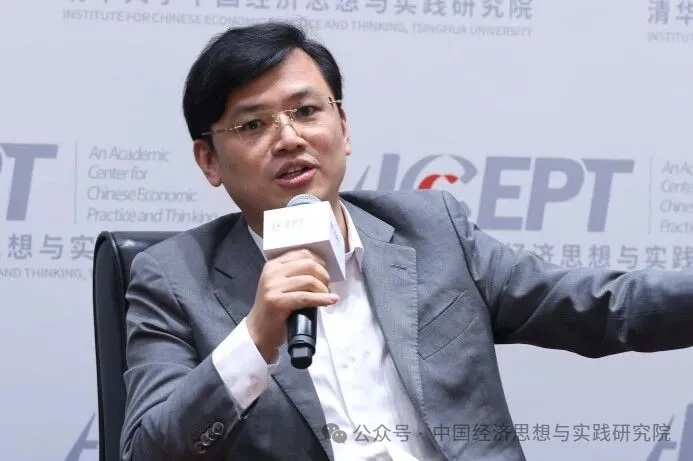
Tang Haiqing conveyed that there is no bubble that has emerged in the AI industry at present, with real industry demand remaining highly robust. First, high-end AI servers are extremely hard to get one's hands on, with spot prices rising from 3 million a year ago to 10 million Chinese yuan, and with server usage rates now fully maxed out. The low utilization rate for some domestic data centers is mainly due to a mismatch in the demand structure and is not representative of a deficiency in overall demand deficiency. Second, current valuations are not considered expensive. Many people are of the view that excessive stock price increases indicate the formation of bubbles, but in reality, earnings have grown even faster. Third, using the generational evolution of optical modules as an example: historically, each generation reached 10 million units before hitting the ceiling and then iterating again thereafter. But this time, two generations of products are rapidly emerging simultaneously, representing demand creation at the level of the Industrial Revolution. He further emphasized that the Scaling Law's technical pathway has not yet encountered bottlenecks. Each generation of model upgrades requires about a fivefold increase in computing power, with 3 to 5 generations of room currently leftover for completing this continued iterative process. More importantly, the business model is already being put into place, with OpenAI and Anthropic now generating over 100 billion US dollars in annual revenue: AI is no longer just a story of burning through money without profits.