


Ming Ming: Capital market's K-shaped trend reflects deep readjustments to the global economic structure
The following is a summary of Ming Ming's remarks at the 51st Tsinghua University Forum on China and the World Economy held at Tsinghua University, Beijing, and broadcasted online on July 7, 2026. Ming is Chief Economist at CITIC Securities Co., Ltd.
On July 7, 2026, the 51st Tsinghua University Forum of China and the World Economy, hosted by Tsinghua University's Academic Center for Chinese Economic Practice and Thinking (ACCEPT) in partnership with the university's School of Social Sciences, was broadcasted online under the theme of China's 2026 Mid-Year Economic Update. Chief Economist at CITIC Securities Co., Ltd., Ming Ming, delivered remarks and participated in roundtable discussions at the forum alongside other distinguished guests where he commented on the state of the Chinese economy.
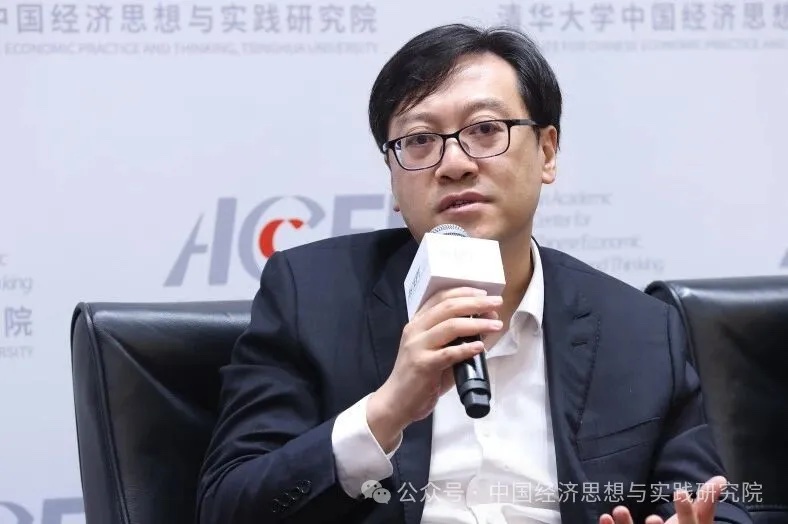
Ming Ming contended that the most notable feature of this year's capital market is the divergence between the technology-related sector and traditional industries. This K-shaped trend reflects both the AI revolution and deep readjustments to the global economic structure. From the US, Japan, South Korea to China, technology-related assets have generally performed outstandingly, while traditional industries remain under pressure, so investors' actual sense of gains is perceptibly weaker than that of the index itself. Regarding the market in the second half of the year, he expects the main emphasis should be on appreciating the key contradictions between the technology sector and traditional industries and capital gains and dividends. Currently, the market maintains a high daily trading volume of over 3 trillion Chinese yuan and is highly active. Once a new narrative emerges, whether it is a significant correction or an industry rotation, the rebound will be rapid. Regarding US Federal Reserve policy, he shared a unique observation: although the new Fed Chair has made hawkish remarks, his actual actions have left room for maneuver, so the probability of rate hikes in the second half of the year is not high. Regarding asset allocation, he noted that the real estate sector has more or less returned to an emphasis on purchasing property for living in, with rental yields in first-tier cities, after considering costs, now being less attractive than fixed deposits, which therefore makes rental properties no longer suitable as investment products. Meanwhile, gold trading is already relatively maxed out, with many people applying ultra-long-term rationales to explain short-term price fluctuations, which hence means less optimism about the gold market's future upside potential.