


Zhao Kejin: China-US strategic stability represents a temporary pause while China's domestic reforms remain closely intertwined with the international strategic landscape
The following is a summary of Zhao Kejin's remarks at the 51st Tsinghua University Forum on China and the World Economy held at Tsinghua University, Beijing, and broadcasted online on July 7, 2026. Zhao is Professor in the Department of International Relations at Tsinghua University's School of Social Sciences.
On July 7, 2026, the 51st Tsinghua University Forum of China and the World Economy, hosted by Tsinghua University's Academic Center for Chinese Economic Practice and Thinking (ACCEPT) in partnership with the university's School of Social Sciences, was broadcasted online under the theme of China's 2026 Mid-Year Economic Update. Professor in the Department of International Relations at Tsinghua University's School of Social Sciences, Zhao Kejin, delivered remarks and participated in roundtable discussions at the forum alongside other distinguished guests where he commented on the state of the Chinese economy.
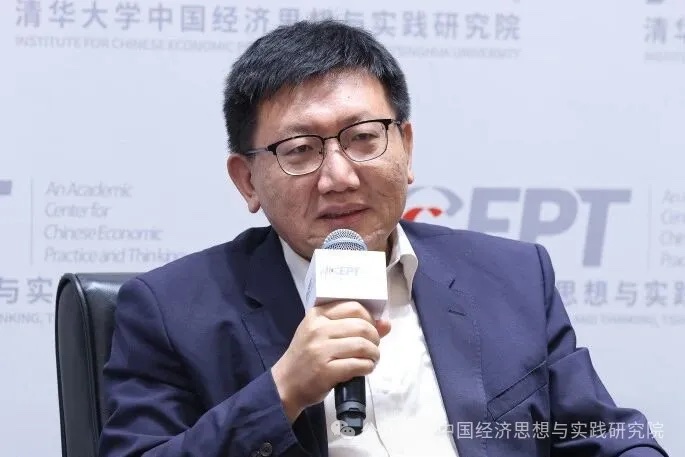
Zhao Kejin suggested that the formation of a "constructive strategic and stable relationship" between China and the US is essentially a temporary pause in the strategic game that the two countries are playing. After the US launched its tariff war, its leaders found it rather difficult to unilaterally coerce China, with the US also having to bear considerable costs itself, so the intention now is to first stabilize relations. Even so, this stability has not removed the underlying contradictions in China-US relations. The strategic game between the two countries has entered a stalemate phase and will continue to affect China's economy and the international environment for many years to come.
Zhao asserted that China's current economic issues cannot be understood solely from the perspective of domestic policies, but must also be viewed within the context of the international landscape. A key condition for the success of the reform and opening up period in the past was the mutually beneficial relationship between China and the US in terms of capital, markets and the global system. At present, alongside changes in the domestic power structure within the US, Wall Street's waning influence, and the surging sway of Silicon Valley and the national security sector, the economic foundations of China-US relations are also undergoing a change. Global supply chains are forming into two chains: one focused on efficiency, and the other focused on security. When the logic of security is in the ascendance, economic efficiency will be sacrificed, with decoupling and severed supply chains often being the ultimate result of this line of reasoning.