


David Daokui Li: Remain confident in China's economic prospects while freeing up local government fiscal policies and the circulation of funds in the economy
The following is a summary of David Daokui Li's remarks at the 51st Tsinghua University Forum on China and the World Economy held at Tsinghua University, Beijing, and broadcasted online on July 7, 2026. Li is Director of Tsinghua University's ACCEPT, Co-President of the Society for the Analysis of Government and Economics (SAGE) and Professor at Tsinghua University's School of Economics and Management.
On July 7, 2026, the 51st Tsinghua University Forum of China and the World Economy, hosted by Tsinghua University's Academic Center for Chinese Economic Practice and Thinking (ACCEPT) in partnership with the university's School of Social Sciences, was broadcasted online under the theme of China's 2026 Mid-Year Economic Update. Director of Tsinghua University's ACCEPT, Co-President of the Society for the Analysis of Government and Economics (SAGE) and Professor at Tsinghua University's School of Economics and Management, David Daokui Li, delivered remarks and participated in roundtable discussions at the forum alongside other distinguished guests where he commented on the state of the Chinese economy.
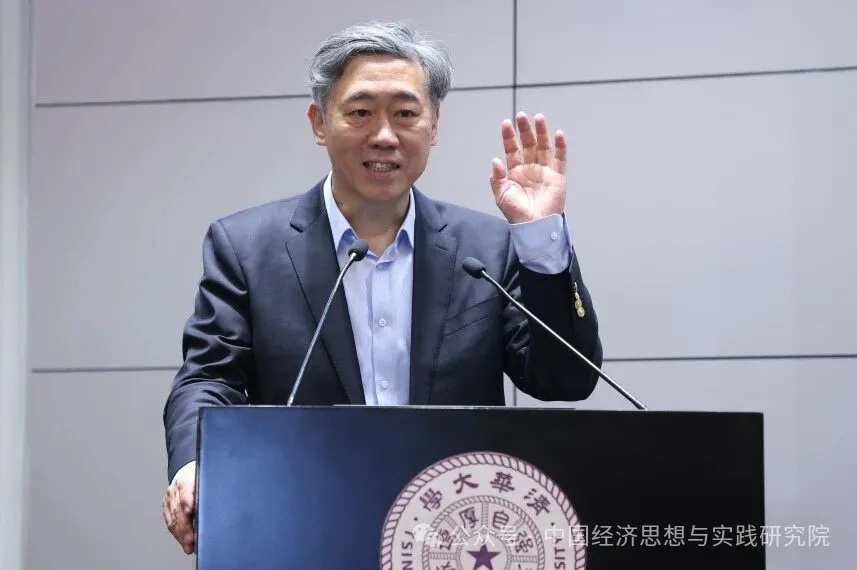
David Daokui Li stated that although China's economy is currently facing certain difficulties, such as declining investment and rising employment pressures, the foundations for sustaining the country's long-term development remain solid. With its vast untapped demand, a high savings rate, abundant high-skilled talents in engineering and technology, and a continuously improving and healthier human capital reserve, one can remain firmly confident in the country's economic outlook. At the same time, it is also necessary to squarely confront the genuine issues that have cropped up from declines in fixed asset investment and across employment sectors. Li argued that the principal obstacle hindering the economy's current performance is a "stagnation and blocking up" of the circulation of funds. Therefore, he recommended taking actions to stabilize the real estate market, including by subsidizing the interest on home loans and purchasing excess housing stocks, in addition to promoting the urban domiciliation of rural migrant workers and investing in people. In order to unleash the dynamism of local government fiscal policies, the central government should also issue additional government bonds to swap out high-cost local government debt. He underscored that macro-level governance of the economy must shift from the previous public finance mindset, which places its emphasis on an annual balance sheet of revenues and expenditures, to a public finance mindset that coordinates in tandem across the full repertoire of government assets, liabilities and longer-term returns.