


Vincent Tianquan Mo: Chinese enterprises still face major challenges when “going out” globally
The following is a summary of Vincent Tianquan Mo's remarks at the 50th Tsinghua University Forum on China and the World Economy held at Tsinghua University, Beijing, and broadcasted online on January 13, 2026. Mo is Managing Director of the China Index Academy, Chairman of Pukai Energy, and Founder and former Chief Executive Officer of Fang (SouFun) Holdings Ltd.
On January 13, 2026, the 50th Tsinghua University Forum of China and the World Economy, hosted by Tsinghua University's Academic Center for Chinese Economic Practice and Thinking (ACCEPT) in partnership with the university's School of Social Sciences, was broadcasted online under the theme of "China's Economy in 2026." Managing Director of the China Index Academy, Chairman of Pukai Energy, and Founder and former Chief Executive Officer of Fang (SouFun) Holdings Ltd, Vincent Tianquan Mo, delivered remarks and participated in roundtable discussions at the forum alongside other distinguished guests where he commented on the state of the Chinese economy.
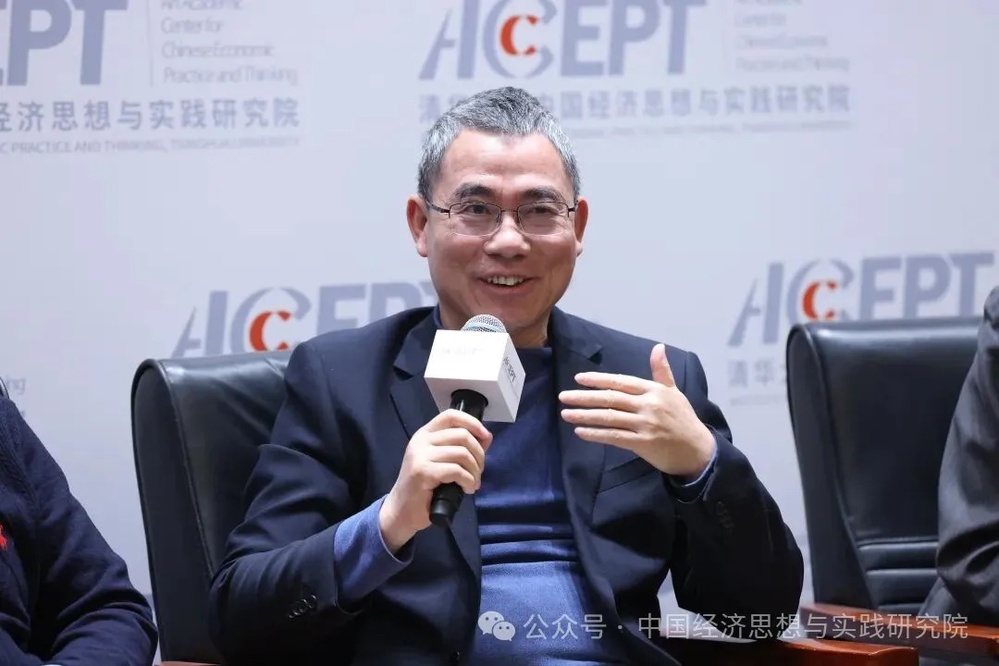
Vincent Tianquan Mo suggested that the move towards “going out” among Chinese enterprises is not a short-term phenomenon, but is rather a move being driven by underlying economic laws. On the one hand, domestic competition has intensified, with profit margins becoming increasingly squeezed, such that enterprises are now urgently in need of exploring opportunities to expand into overseas markets. On the other hand, the demand for resources has spurred enterprises towards “going out” in order to source these inputs and import them for domestic use. This trend is not only present in China, with enterprises in the US and other countries having also been engaged in similar types of outbound investment activities.
In summing up his long-term first-hand experience in Pakistan, Mo emphasized that the key to “going out” is not whether the country is “underdeveloped,” but whether it has an adequate population size, potential for market development and a more or less stable political environment, with the most important aspect being the selection of appropriate locations and suitable business partners. He further stressed that there are three types of partnerships that must be considered when engaging in overseas investments: namely, government-to-government cooperation and business-to-business cooperation, as well as trustworthy ties and financial links at the individual level, with factors associated with the individual level often being underestimated in practice. The biggest mistake that China's private enterprises make when “going out” is to overlook the need for a proper approach to benefits sharing. If space is not given up in terms of the allocation of revenues, it will be difficult to form a long-term and sustainable cooperative relationship, which means that one may only otherwise be able to engage at the level of short-term trade ventures. In terms of strategic models, he compared the two tracks of “a multi-country rollout” and “a single-country deep cultivation,” arguing that the more feasible route is to select a country that can ensure sufficient throughput all while making every effort to secure one’s specific niche, which would therefore help to realize stable long-term overseas operations.
On the issue of the real estate market, Mo had a relatively optimistic outlook. He asserted that adjustments to the real estate sector have already elapsed over the course of five years, with these policy moves having not yet been fully exhausted. At the same time, the importance of the real estate sector in terms of the national economy, household assets and local debt ultimately means that it would be “inevitably rescued.” Although it is hard to accurately predict the inflection point for the market, from the perspectives of optionality and practicality, he considers it to be an opportune time to purchase a residential property.