


Lu Ting: Investment firms “have struck an optimistic tone” despite downward economic pressure in second half of 2025
The following is a summary of Lu Ting's remarks at the 50th Tsinghua University Forum on China and the World Economy held at Tsinghua University, Beijing, and broadcasted online on January 13, 2026. Lu is Managing Director and Chief China Economist at Nomura Holdings, Ltd.
On January 13, 2026, the 50th Tsinghua University Forum of China and the World Economy, hosted by Tsinghua University's Academic Center for Chinese Economic Practice and Thinking (ACCEPT) in partnership with the university's School of Social Sciences, was broadcasted online under the theme of "China's Economy in 2026." Managing Director and Chief China Economist at Nomura Holdings, Ltd., Lu Ting, delivered remarks and participated in roundtable discussions at the forum alongside other distinguished guests where he commented on the state of the Chinese economy.
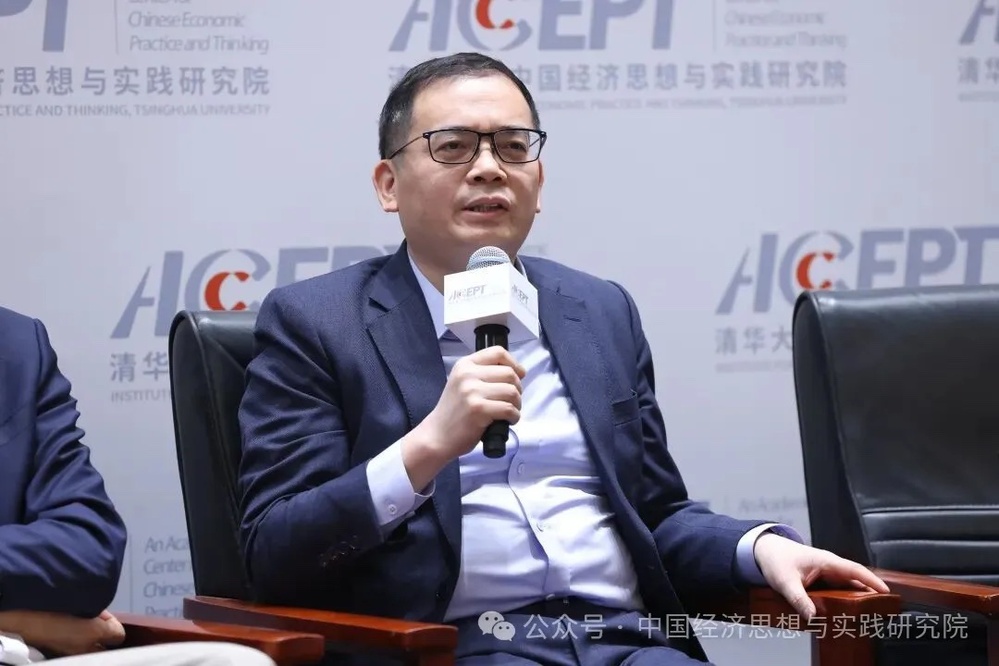
Lu Ting called attention to the downward pressure on the economy in the second half of 2025, which increased significantly, while the data released in the fourth quarter showed a further marked deterioration. Fixed asset investment has dropped precipitously, with investments into real estate, infrastructure and manufacturing showing an all-around decline. Consumption has been affected by the pulling forward of demand from the “trade-in” scheme in place from July 2024 to May-June 2025, as automobile sales underwent a 13% year-over-year reduction in December. He anticipated that in the first and second quarters of 2026, fixed asset investment, real estate sales, prices and retail sales will likely continue to remain under pressure. As for capital markets in 2026, Lu noted that investment institutions, in general, “have struck an optimistic tone, but are more cautious than in 2025.” The main reason is that stock markets around the world have risen sharply, which has hence raised the baseline, and although the Chinese stock market still has some room left to go, any increase may be smaller than last year. Over the past three years, China has faced certain unique challenges, such as deflation, a nominal GDP growth rate that remains lower than the real GDP growth rate, and the ongoing drag of the real estate market, so it is difficult to foresee a sharp uptick in the stock market. With regards to gold, due to factors such as the new normal of high deficits in developed countries and geopolitical turbulence, Lu concluded that there is a low likelihood of a drastic downswing in the next five years. In terms of the RMB, he made mention of the fact that the international community often refers to the currency’s undervaluation and China’s significant current account surplus, although the real effective exchange rate of the RMB itself has nevertheless remained relatively stable during the past few years, with the pressure towards depreciation actually having been greater. Meanwhile, the surging expansion of China’s trade surplus reflects improvements to manufacturing efficiency, changes in its energy mix and improved terms of trade. If currency appreciation is actively pursued, this will be difficult to support in the context of weak domestic demand and continued deflation, with any such adjustments upwards thus expected to be of a limited scope. Finally, inflows of international funds into China A-shares or the Hong Kong Stock Exchange are unlikely to be very promising.