


50th Tsinghua University Forum of China and the World Economy successfully held at Tsinghua University
Originally published January 14, 2026, in Chinese on ACCEPT's social media account. Translated by ACCEPT.
Source: https://mp.weixin.qq.com/s/YbYW22JSW5C9-8ygeM3Kdw
China’s Economy in 2026
50th Tsinghua University Forum of China and the World Economy
On January 13, 2026, the 50th Tsinghua University Forum of China and the World Economy, organized by the Academic Center for Chinese Economic Practice and Thinking (ACCEPT) at Tsinghua University, was broadcast online. The event’s theme was entitled “China's Economy in 2026.” Guests in attendance at the biannual forum included Huang Hanquan, Head of the Chinese Academy of Macroeconomic Research under the National Development and Reform Commission; Da Wei, Director of the Center for International Security and Strategy (CISS) and Professor in the Department of International Relations at Tsinghua University's School of Social Sciences; Lin Zhouchen, Professor at Peking University’s School of Information Science and Technology; Lu Ting, Managing Director and Chief China Economist at Nomura Holdings, Ltd.; Vincent Tianquan Mo, Managing Director of the China Index Academy, Chairman of Pukai Energy, and Founder and former Chief Executive Officer of Fang (SouFun) Holdings Ltd.; Qin Hong, Senior Researcher of Renmin University of China’s National Academy of Development and Strategy and former Director of the Policy Research Center at the Ministry of Construction (Ministry of Housing and Urban-Rural Development from 2008); Wei Shaojun, Professor at Tsinghua University’s School of Integrated Circuits; Zhang Bin, Deputy Director of the Institute of World Economics and Politics (IWEP) at the Chinese Academy of Social Sciences (CASS); David Daokui Li, Director of Tsinghua University’s ACCEPT, Co-President of the Society for the Analysis of Government and Economics (SAGE) and Professor at Tsinghua University’s School of Economics and Management; and Liu Peilin, Chief Researcher at Tsinghua University's ACCEPT. The Deputy Executive Director of ACCEPT, Li Ke’aobo, presided over the forum’s proceedings.
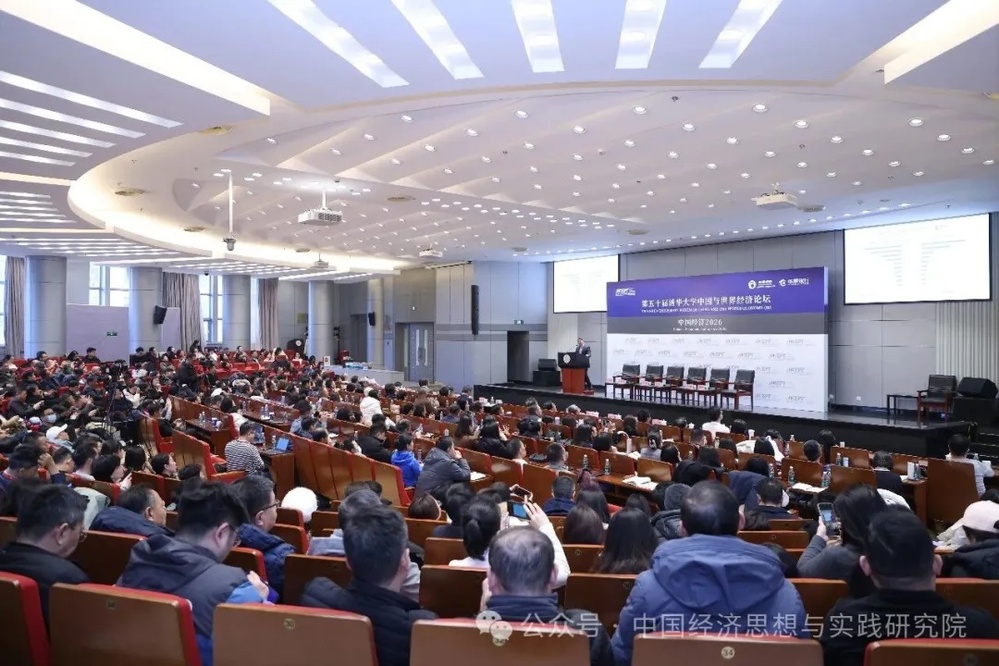
During the forum, Liu Peilin, Li Bing and Wu Shuyu, researchers at ACCEPT, jointly released the latest China Macroeconomic Analysis and Forecast Report on behalf of the research institute entitled “Fully Unleashing the Potential for Economic Growth by Upgrading the Paradigm of a Development-oriented Government. The report pointed out that China's economy still has huge growth potential, with the untapped potential of consumer demand, a high savings rate, steadily improving scientific and technological innovation capabilities and high-quality human resources together providing solid support for the continued improvement of the overall economy. However, there are certain blockages and barriers that remain in the way of the economy’s current operations, with its growth potential having not yet been fully unleashed. At present, the main issues impinging upon the economy’s performance are as follows: a continuous decline in economic growth, weak domestic demand, a contraction in overall fiscal expenditures, a slowdown in the growth of household incomes, a decline in fixed asset investment, sluggish private investment, a continued downturn in the real estate market, and a scaling down of foreign direct investment.
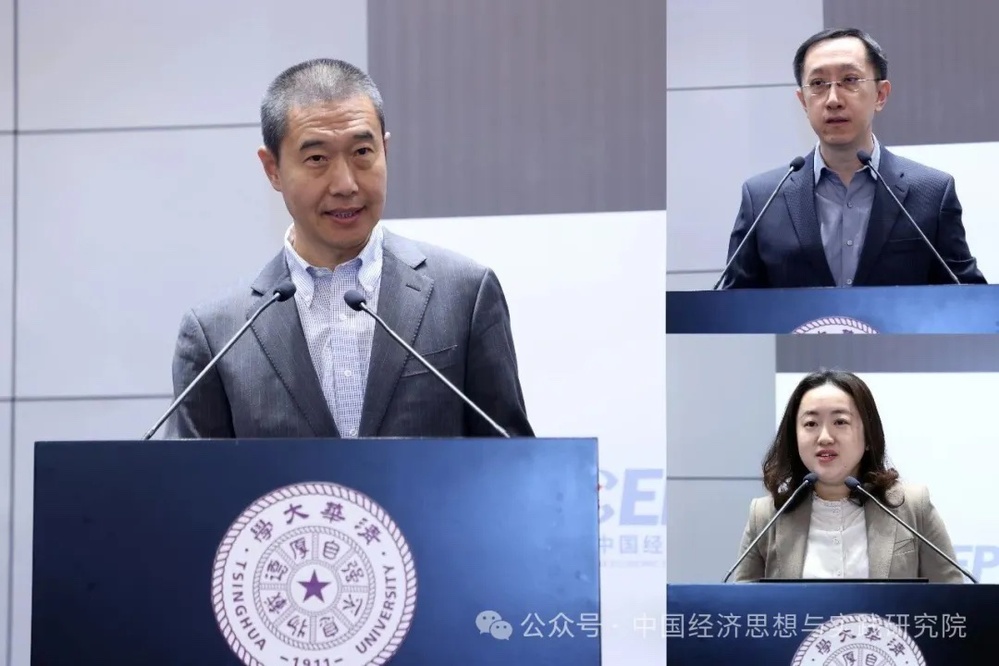
Liu Peilin (left), Li Bing (top-right) and Wu Shuyu (bottom-right) introduce some of the findings from latest China Macroeconomic Analysis and Forecast Report on behalf of the Academic Center for Chinese Economic Practice and Thinking (ACCEPT) at Tsinghua University.
The report emphasized that in order to ensure that economic growth remains within a reasonable range during the 15th Five-Year Plan period, there is now a pressing need to work towards reversing the overall downward trend in economic growth that has been witnessed in recent years. The key to breaking past the country’s deep-seated structural constraints revolves around solving the core problem of shifting government functions, which lag behind the transformation of the economy’s stage of development. Although the “development-oriented government 1.0,” with its main goals of promoting rapid economic growth and industrial upgrading, has played a crucial role during the process of reform and opening-up, given the constant evolution of the economy’s stage of development, government mechanisms and incentives must now be reformed in turn to facilitate the formation of a welfare-oriented and service-oriented government based on the notion of “taking responsibility for welfare, spurring consumption, and benefiting people's livelihood” - that is, a “development-oriented government 2.0.”
Based on the above analysis, the report outlines a number of specific directions for reforming an upgraded paradigm of the development-oriented government. First, with regard to resolving the liquidity troubles associated with local government finances and ongoing obstructions to overall macroeconomic circulation, firmly put into place a new concept of “modern public finance,” including by issuing national government bonds on a large scale to replace local government bonds, revamping the assessment mechanisms for government officials, optimizing the institutional design of central and local governments, undertaking reforms to the tax system, and establishing “consumption-oriented” fiscal incentives. Second, empower local governments to shift from their previous focus on production and construction towards a focus on public services, including by setting up human resources development committees, designing reasonable human resources evaluation indicators, and increasing government incentives to “invest in people.” Third, with the goal of maintaining the stability of residents' wealth holdings, establish an agency to comprehensively arrange for unified planning and coordinated management in overseeing the sound development of the real estate market, in addition to introducing short-term policies discounting interest rates so as to revive residents' willingness to purchase residential properties. Fourth, remain steadfast in the development of artificial intelligence (AI), including by establishing a national-level committee for AI development and governance, formulating and implementing strategies to safeguard employment in the AI era, and resolving challenges to employment through policy innovation. Fifth, establish a national-level committee for the harmonious development of trade to push forward the transformation of government functions from promoting imports and exports towards the harmonious development of international trade balances, including by coordinating multilateral and bilateral economic and trade relations, taking the initiative to open up as a new leader in globalization, and supporting a move from an export-oriented to an outbound investment-driven model.
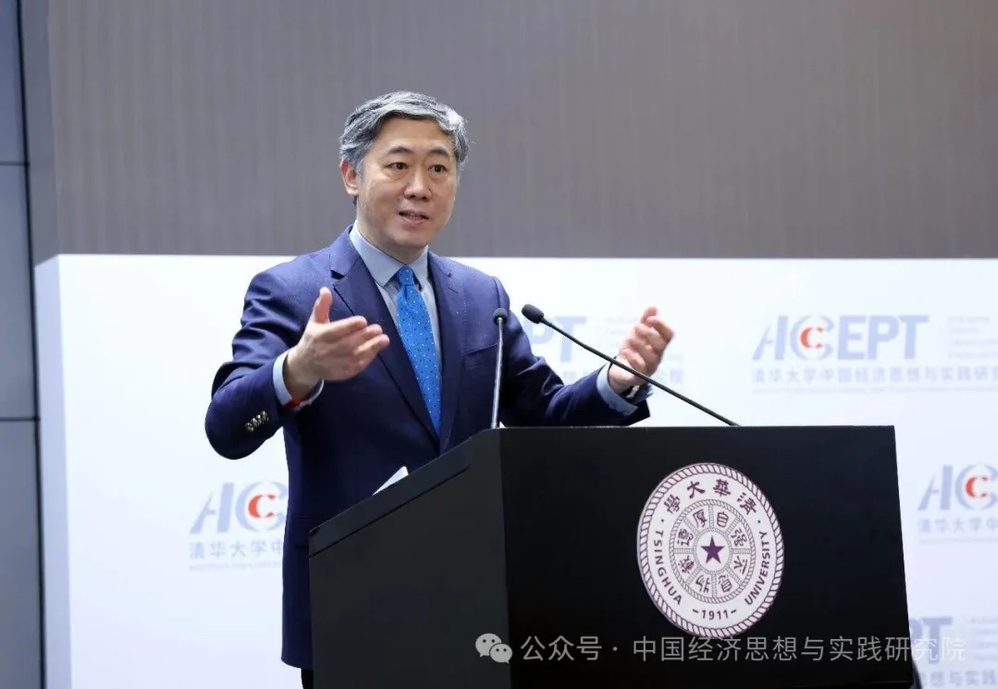
David Daokui Li then proceeded to summarize the report’s main findings. He once again emphasized that the long-term development potential of China's economy remains enormous, such that one can firmly command confidence moving forward on the basis of rational analysis; but at the same time, there is also a necessity to squarely face up to current challenges. Li expressed his view that the government needs to undergo an overhaul by redesigning certain incentive mechanisms, with government functions repositioning from their previous focus centering on production and investment towards supporting consumption and benefiting people's livelihood. As for specific ways and means to achieve this, he suggested that first of all the division between departments must be overcome, including by exploring the establishment of cross-departmental planning and coordination mechanisms in the form of committees, offices or leading groups, in this way bringing about systematic policy synergies from pooled efforts in the four key areas of human resource development, real estate development, AI development and governance, and balanced international trade development that addresses the deep challenges of demographics, assets, technological advancement and the external environment. Secondly, real estate possesses dual attributes as both a financial asset and as a part of people's livelihood, which has a profound impact on residents' balance sheets and consumption behavior. Hence, it is necessary to stabilize real estate prices through the rollout of policy tools such as interest rate discounting, set at a limited scale and with a clear timeline, so as to counteract the influence of the real estate market on residents' asset holdings, debt burden and consumer confidence.
Li argued that the market economy is not representative of the natural state of things, but instead involves a set of complex institutional arrangements that need to be carefully maintained between the government and the market. The government is responsible for bearing the burden of sustaining such arrangements, although its capacity to intervene must also remain restrained. Based on this realization, therefore, Tsinghua ACCEPT holds up the development of the field of “government and economics” as its utmost scholarly pursuit. The research institute has registered the Society for the Analysis of Government and Economics (SAGE), and as of today, five Nobel Prize winners in economics have joined its Academic Committee as members. After holding annual conferences on government and economics and founding the English-language quarterly Journal of Government and Economics, SAGE has garnered significant influence within the international academic community in a short period of time. Most recently, Tsinghua ACCEPT launched a specialized Chinese-language journal called Research on Government and Economics, which will strive to promote the research field’s development through highly readable and widely disseminated research results. Only by systematically studying the behavioral logic of the government as a market participant, along with its various incentives and constraints, can we elevate the long-term stability and high-quality development of China's market economy in an environment characterized by increasing uncertainty at home and abroad.
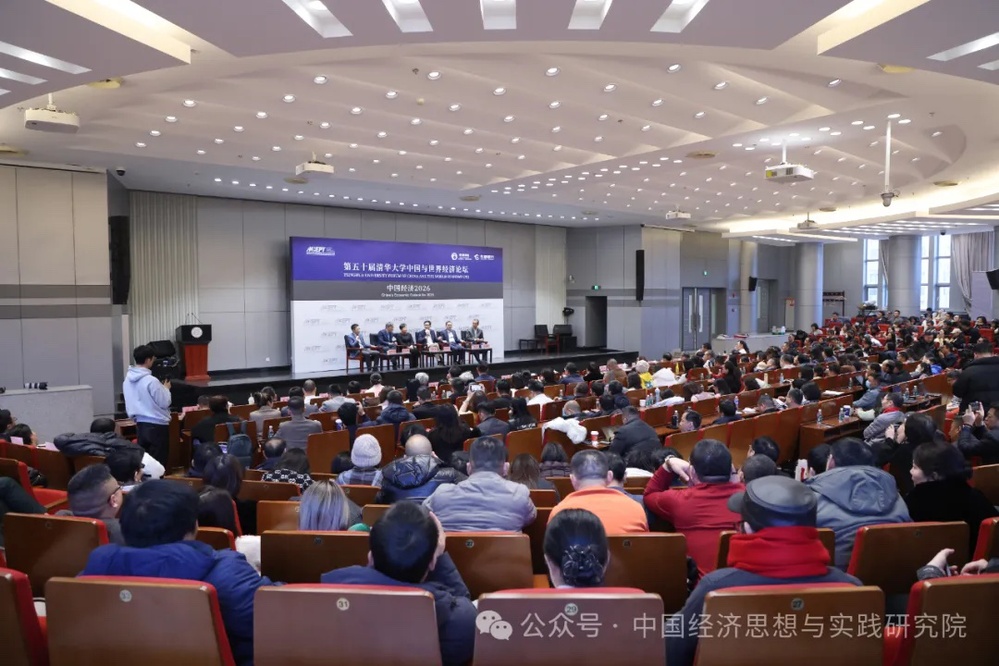
During the subsequent roundtable discussion segments of the forum, each of the invited guests engaged in an exchange of views on a variety of spotlighted topics across the domestic and world stages.
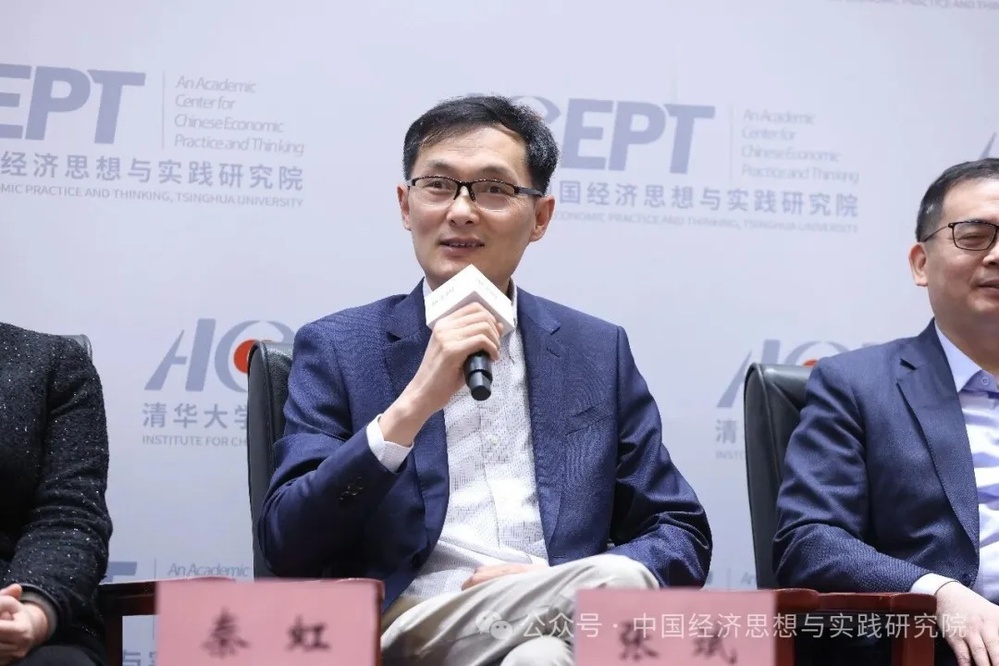
Zhang Bin explained that in the context of the continuously ratcheting up counter-cyclical policies, economic sentiment in 2026 is expected to be significantly better than that in 2025, which means that one can remain optimistic about future macroeconomic trends. In response to the widely acknowledged news about China’s trade surplus, he mentioned that the deep logic behind this phenomenon not only stems from improvements to China's manufacturing competitiveness and import substitution effects, but also reflects the cyclical challenges associated with insufficient domestic demand and the resulting undervaluation of the Renminbi’s (RMB) real effective exchange rate. In order to resolve the contradiction of “strong supply and weak demand,” Zhang stressed that the most important way to expand domestic demand depends on energizing market forces, rather than relying solely on government-backed investments. He recommended a significant reduction in real interest rates as one of the main measures to undertake, which would effectively reduce the costs associated with private enterprises’ investments and residents' home purchases, thereby improving expectations of higher gains and enabling the “accounts” of individual decision-making units within the economy to be more readily managed. Zhang further advised that if the central bank’s policy interest rate can drive the broad-spectrum of borrowing and savings interest rates across the country to continue falling, and if kept within the bounds of a firm commitment to the inflation target, such moves will help to effectively stabilize public sentiments and invigorate the potential for domestic consumption. According to these views, he therefore predicted that a reversal in the downward trend for asset prices has begun to take hold, with the improving performance of the real estate market thus being a point of great anticipation in 2026.
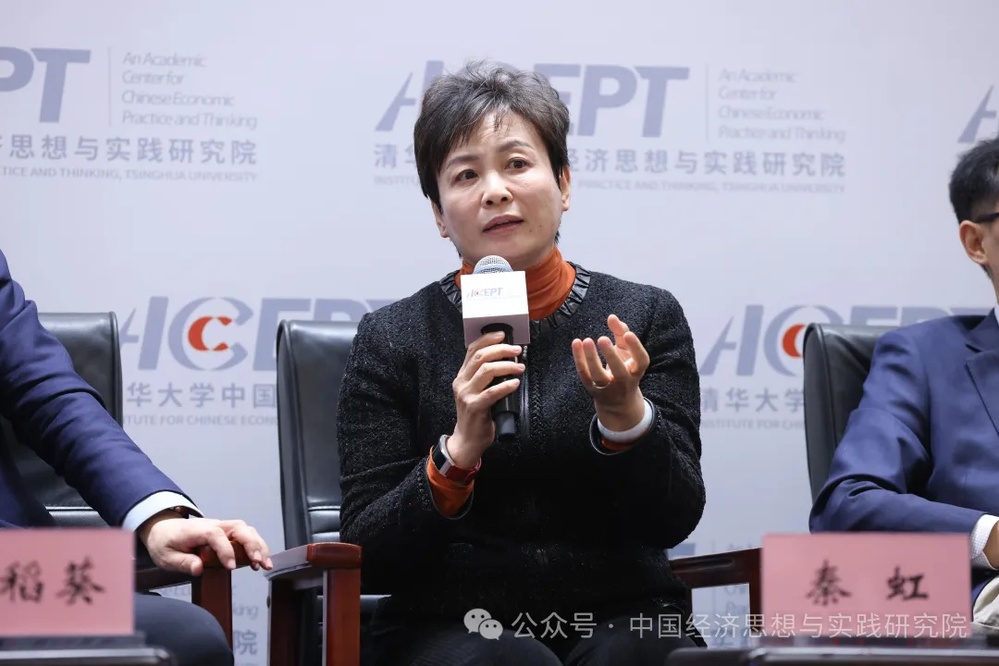
Qin Hong relayed her view that, at least from a country-wide perspective, it remains difficult to foresee a significant turnaround in the real estate market. By the end of 2025, the total area of new commodity residential properties sold for the year had a negative growth rate of around 8%, while the overall volume of sales showed a negative growth rate of 10%. In order to achieve positive growth momentum in 2026, there needs to be a rebound in sales by an order of 10% or higher, which therefore presents a significant hurdle. The second-hand housing market is also facing pressures from a high number of listings and an overall state of oversupply, with little optimism at present in the prospects for a U-turn. In 2025, national real estate indicators were all generally in the negative, with the only positive growth accruing to the saleable area of commodity housing inventories sold on consignment. Although the overall market is sluggish, there are still some bright spots that are constructive signs: according to data from the China Index Academy, the new home price index in 100 cities across the country increased slightly on a month-over-month and year-over-year basis in December, mainly arising from strong sales for a small number of high-end housing projects. These projects have driven prices up to a certain degree, but the transaction volume has been small and is not representative of the overall situation, being more about meeting the asset allocation needs of high-net-worth individuals rather than indicating an improvement in rigid demand.
She underscored that the differentiation of residential properties in the real estate market has entered a stage where it is now full-dimensional and all-inclusive. Higher-quality housing units in key cities and key districts have taken the lead in terms of their market performance, but there is no historical comparison to draw upon and this moreover does not represent the overall trend. Meanwhile, cities that did not experience the most recent surges in prices have witnessed only minor declines, with housing prices even remaining stable. Local governments are actively expanding the construction of high-end housing projects and selling land to stabilize their finances, but there is a direct conflict between the goal of increasing incremental supply on the one hand and the goal of balancing supply and demand while stabilizing prices on the other hand.
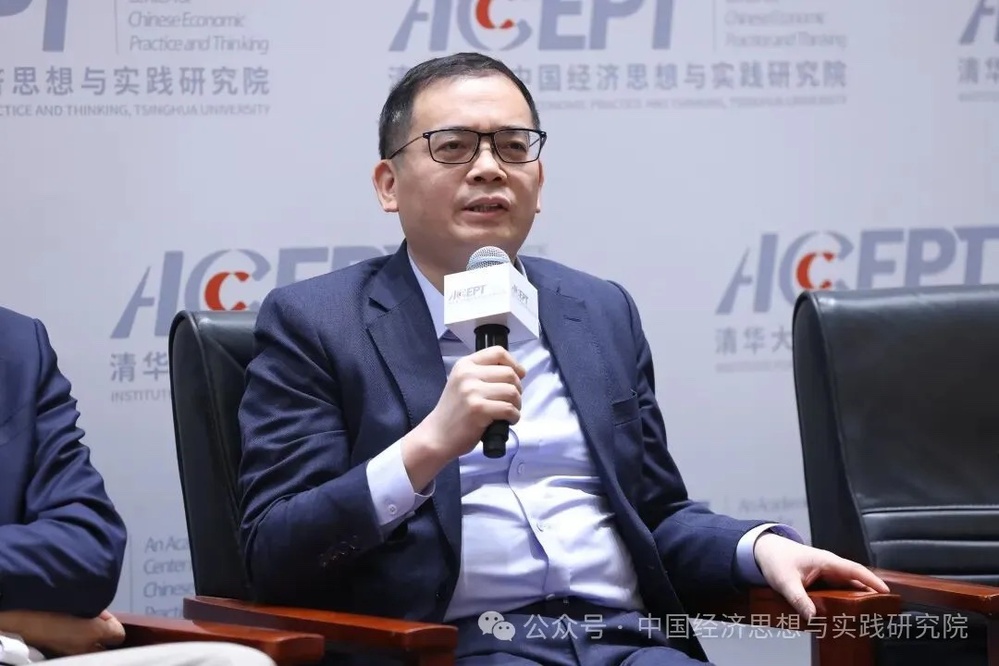
Lu Ting called attention to the downward pressure on the economy in the second half of 2025, which increased significantly, while the data released in the fourth quarter showed a further marked deterioration. Fixed asset investment has dropped precipitously, with investments into real estate, infrastructure and manufacturing showing an all-around decline. Consumption has been affected by the pulling forward of demand from the “trade-in” scheme in place from July 2024 to May-June 2025, as automobile sales underwent a 13% year-over-year reduction in December. He anticipated that in the first and second quarters of 2026, fixed asset investment, real estate sales, prices and retail sales will likely continue to remain under pressure. As for capital markets in 2026, Lu noted that investment institutions, in general, “have struck an optimistic tone, but are more cautious than in 2025.” The main reason is that stock markets around the world have risen sharply, which has hence raised the baseline, and although the Chinese stock market still has some room left to go, any increase may be smaller than last year. Over the past three years, China has faced certain unique challenges, such as deflation, a nominal GDP growth rate that remains lower than the real GDP growth rate, and the ongoing drag of the real estate market, so it is difficult to foresee a sharp uptick in the stock market. With regards to gold, due to factors such as the new normal of high deficits in developed countries and geopolitical turbulence, Lu concluded that there is a low likelihood of a drastic downswing in the next five years. In terms of the RMB, he made mention of the fact that the international community often refers to the currency’s undervaluation and China’s significant current account surplus, although the real effective exchange rate of the RMB itself has nevertheless remained relatively stable during the past few years, with the pressure towards depreciation actually having been greater. Meanwhile, the surging expansion of China’s trade surplus reflects improvements to manufacturing efficiency, changes in its energy mix and improved terms of trade. If currency appreciation is actively pursued, this will be difficult to support in the context of weak domestic demand and continued deflation, with any such adjustments upwards thus expected to be of a limited scope. Finally, inflows of international funds into China A-shares or the Hong Kong Stock Exchange are unlikely to be very promising.
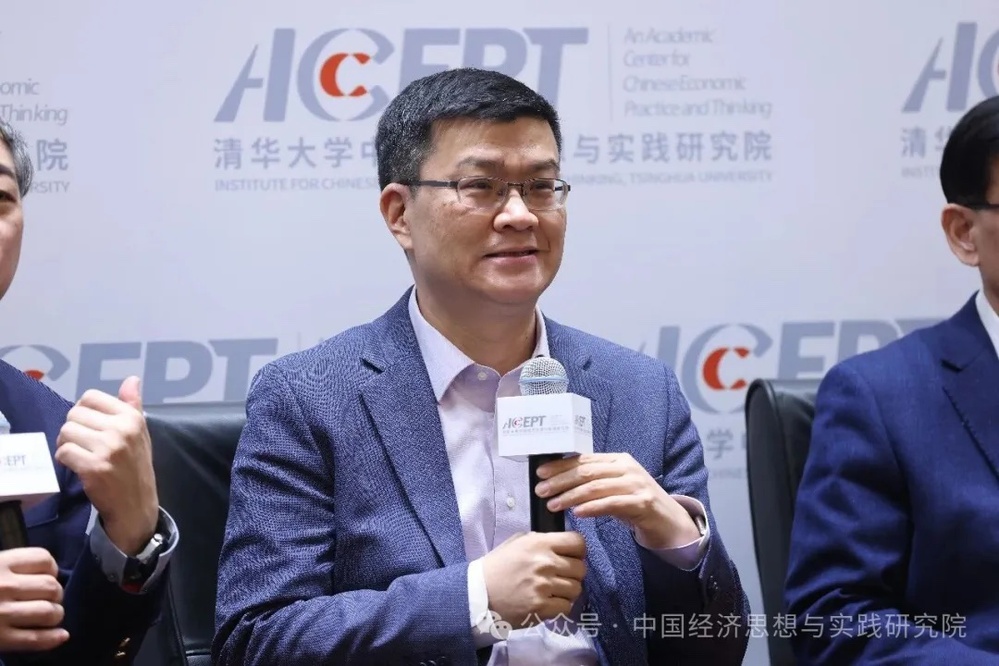
Da Wei observed that the world is currently facing a critical transition period of deglobalization and resurgent nationalism, with springing up of notable incidents such as Venezuela and Greenland being in line with this trend. The foreign policy strategy of the United States in 2026 will prioritize the Western Hemisphere and previous hot spots, with a high probability that attention will continue to be placed on existing areas of contention rather than on actively stirring up new troubles. The core of US President Donald Trump's maneuverings is to focus on the country’s own domestic strengths, rather than on maintaining the US-led international order, which has frequently involved disregarding traditional constraints and presenting a strong ego drive, with the Venezuelan incident likely to have significantly boosted the American president’s confidence. Da stressed that there are now a large number of “unknown unknowns” in the world, such that black swan events are becoming increasingly difficult to predict. In addition to geopolitics, there are also potential hidden risks that may arise from technological developments. He expressed that it is difficult for experts to accurately predict the specific direction of international events, with the capacity instead of only grasping the overall trend. If economic development is to be the main priority, then the biggest opportunity in 2026 is that Sino-American relations are anticipated to stabilize. With the aid of summitry and negotiations among their national leaders, China and US economic relations may develop in the direction of a trade and investment rebalancing. AI has become a key area of competition between the two countries, with Da further mentioning that this competitive approach has since become a point of consensus for both sides.
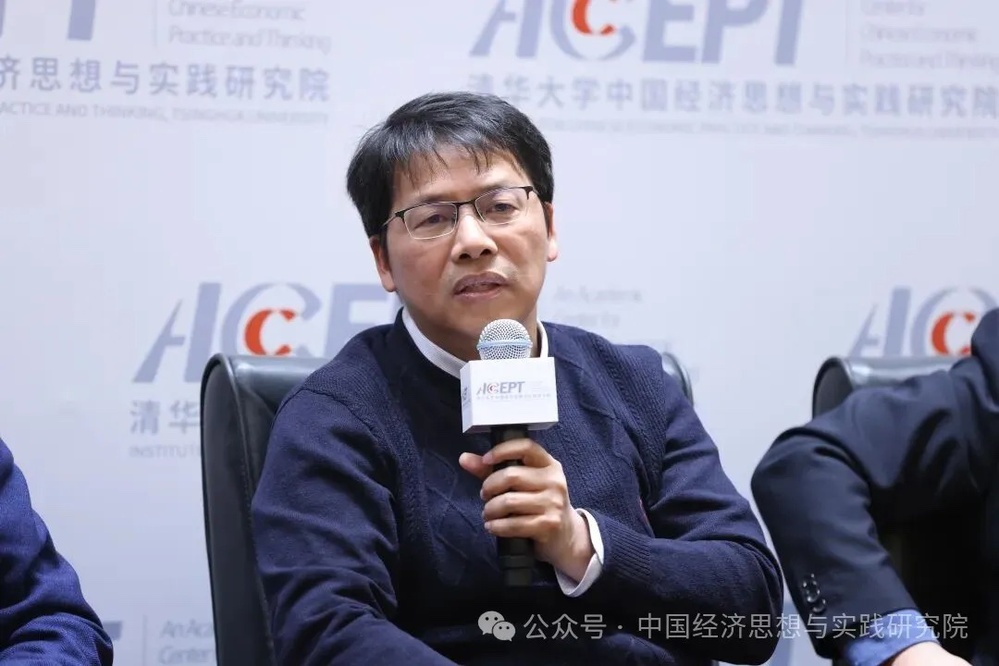
Lin Zhouchen argued that China will become the winner in the Sino-American competition over AI: first, China’s national system possesses institutional advantages; second, China has advantages in skilled talent in terms of the number and quality of students pursuing higher education; third, China has a significant leading edge in data at the level of actual applications of AI; and fourth, China has superiorities given its well-developed industrial and power infrastructure as well as its complete industrial chain. At present, when it comes to China’s gaps in cutting-edge technological processes, the country has the ability to quickly catch up given that the iteration speed for such advanced processes slows down as the degree of difficulty involved increases.
He highlighted that the current private enterprise-oriented model of the US has encountered certain stumbling blocks, with the returns from expanding the scale of computing power having declined significantly and with almost all AI companies in the US now losing money, a trend that will soon be unsustainable. Alternatively, China has advocated for employing AI as a way to augment various targeted use case scenarios in order to improve efficiencies, while investing in the deployment of AI only after the potential for profitability has been established, which is a comparatively more pragmatic approach. Current AI technologies are highly capable at processing data and information, but deficiencies remain as concerns interactions with the physical world. As a result, industries dominated by information processing are better positioned to integrate AI, with those industries requiring more real-world physical interaction meanwhile being relatively slower to integrate AI, although the potential for further adoption in the latter remains massive. He further specified that it remains difficult to produce efficiencies given the current scattered layout of computing infrastructure, which therefore demonstrates the need to establish unified national computing power facilities. By providing computing power vouchers to meet the demand for computing power, this will in turn give full play to the advantages derived from achieving economies of scale.
Lin also commented that although the current level of AI is still far from reaching the level of artificial general intelligence, the technology has already reached a medium to high level in some industries in terms of its capabilities, which has already had a considerable impact on some areas of employment. Thus, students nowadays should recognize the fact that many industries may possibly be disrupted in the future, which means that continuous learning will become a necessity. For most people, moreover, mastering AI will become an indispensable basic skill in the future.
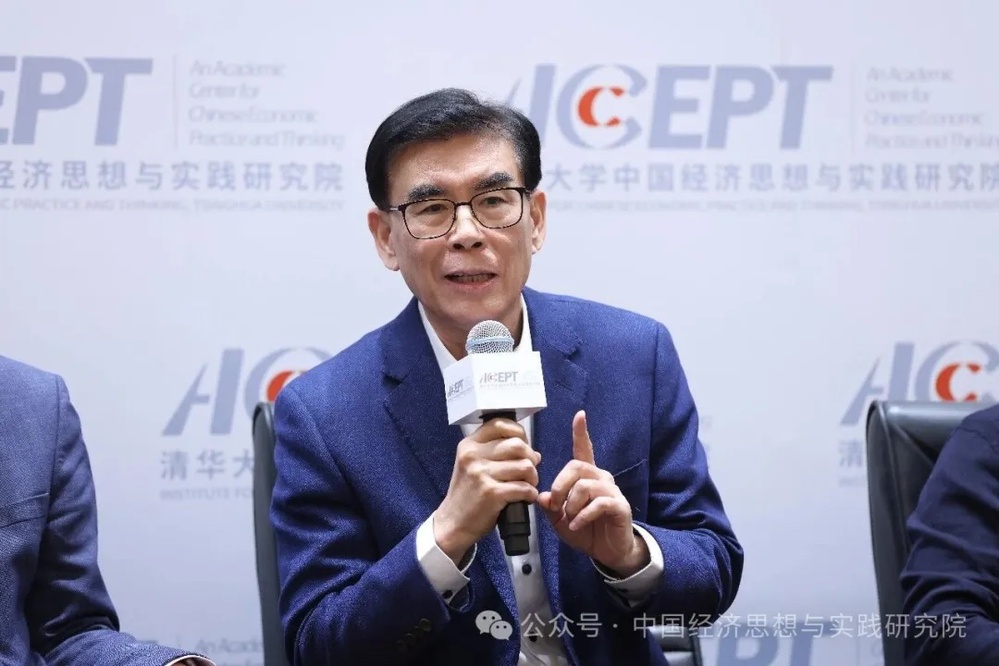
Wei Shaojun claimed that China's integrated circuit industry is approaching a critical stage of striding towards self-reliance and self-improvement, although all the bottlenecks have not yet been completely resolved. Even so, the country has already basically achieved independence in low- and mid-range chips as well as some high-end segments, while external blockades have only accelerated the restructuring of the domestic supply chain and market acceptance of domestic chips. In view of the objective weak points in manufacturing processes, Wei proposed a strategic pathway based on architectural innovations so as to make up for the shortcomings in these processes, asserting that in the context of the slowdown in Moore's Law, the same level of performance can be achieved without relying on the most advanced processes by instead optimizing the computing architecture and software design. However, he was also frank in his assessment that smartphone chips, given the particularly high requirements placed on their power consumption and volume, are at present the only area where it is difficult to completely compensate for gaps in manufacturing processes by simply introducing architectural innovations.
In response to arguments related to lane changing and overtaking in the integrated circuit industry, Wei was explicit in stating that new technologies such as photonic computing and quantum computing are unlikely to replace silicon-based semiconductors at the industrial level during the next two decades, with silicon-based technology holding onto its mainstream position as China continues to strive towards catching up within the most immediate timeframe. Looking forward to the future, he expects that the 15th Five-Year Plan period will prove to be a decisive period for the country’s industrial development, with the development model now needing to shift from making technological breakthroughs along single pinpointed areas towards comprehensive advancements that combine all of these components into a systematic whole. He called on domestic users to reduce their dependence on foreign chips, such as those from Nvidia, while domestic chips should instead be supported. Meanwhile, the various advantages derived from the new system for mobilizing China’s national capabilities can be leveraged to promote deep integration and system-level collaboration between domestic chips and AI algorithms, while aiming towards firmly establishing the country’s leading global position in the field of computer architecture.
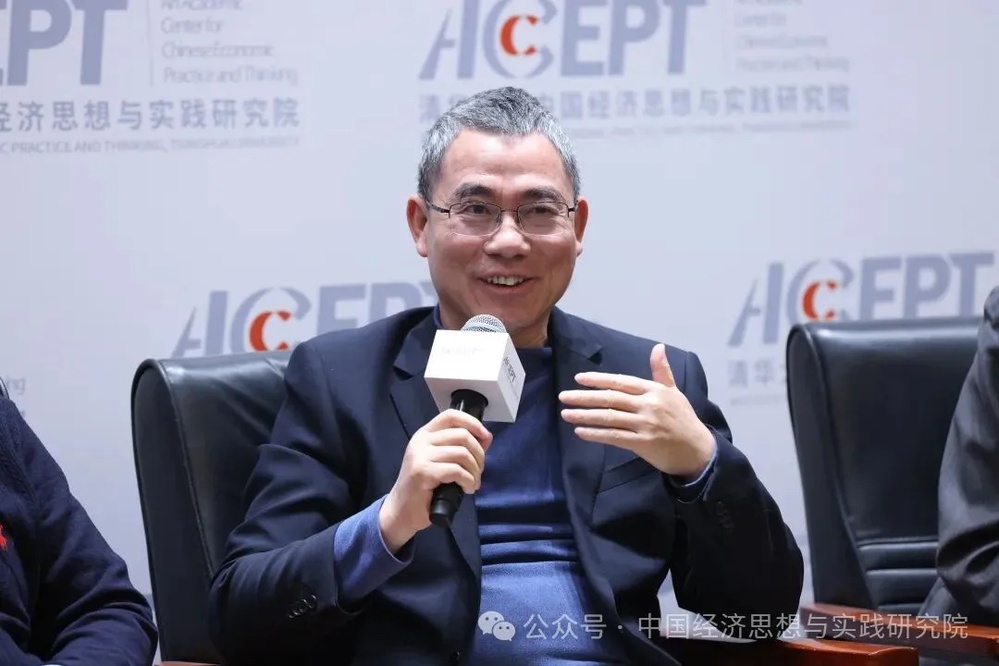
Vincent Tianquan Mo suggested that the move towards “going out” among Chinese enterprises is not a short-term phenomenon, but is rather a move being driven by underlying economic laws. On the one hand, domestic competition has intensified, with profit margins becoming increasingly squeezed, such that enterprises are now urgently in need of exploring opportunities to expand into overseas markets. On the other hand, the demand for resources has spurred enterprises towards “going out” in order to source these inputs and import them for domestic use. This trend is not only present in China, with enterprises in the US and other countries having also been engaged in similar types of outbound investment activities.
In summing up his long-term first-hand experience in Pakistan, Mo emphasized that the key to “going out” is not whether the country is “underdeveloped,” but whether it has an adequate population size, potential for market development and a more or less stable political environment, with the most important aspect being the selection of appropriate locations and suitable business partners. He further stressed that there are three types of partnerships that must be considered when engaging in overseas investments: namely, government-to-government cooperation and business-to-business cooperation, as well as trustworthy ties and financial links at the individual level, with factors associated with the individual level often being underestimated in practice. The biggest mistake that China's private enterprises make when “going out” is to overlook the need for a proper approach to benefits sharing. If space is not given up in terms of the allocation of revenues, it will be difficult to form a long-term and sustainable cooperative relationship, which means that one may only otherwise be able to engage at the level of short-term trade ventures. In terms of strategic models, he compared the two tracks of “a multi-country rollout” and “a single-country deep cultivation,” arguing that the more feasible route is to select a country that can ensure sufficient throughput all while making every effort to secure one’s specific niche, which would therefore help to realize stable long-term overseas operations.
On the issue of the real estate market, Mo had a relatively optimistic outlook. He asserted that adjustments to the real estate sector have already elapsed over the course of five years, with these policy moves having not yet been fully exhausted. At the same time, the importance of the real estate sector in terms of the national economy, household assets and local debt ultimately means that it would be “inevitably rescued.” Although it is hard to accurately predict the inflection point for the market, from the perspectives of optionality and practicality, he considers it to be an opportune time to purchase a residential property.